
Can You Have Laser Hair Removal on Tanned Skin? What New Laser Technology Changes
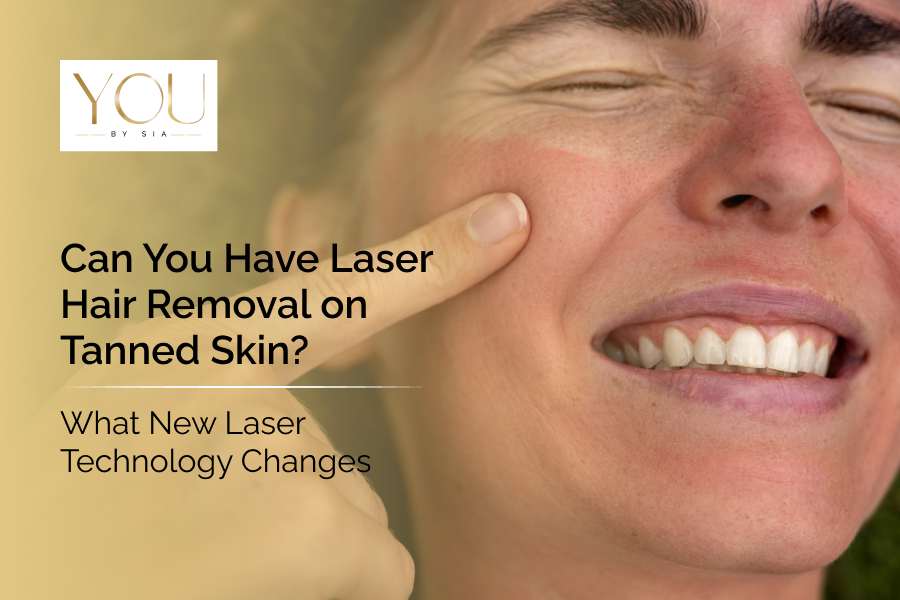
You come back from holiday, notice your skin is noticeably darker, and then remember your laser hair removal appointment is next week. Should you keep it or reschedule?
That is not a straightforward decision. A recent tan changes the amount of melanin in your skin, and laser hair removal relies on targeting pigment in the hair follicle. When the surrounding skin contains more pigment than usual, it can absorb more laser energy too. That can increase the risk of burns, irritation and pigmentation changes.
But tanning does not automatically mean that laser treatment is off the table. The answer depends on how recent and intense the tan is, whether the skin is healthy, and how the practitioner can adjust treatment for your current skin tone.
Newer laser systems have also changed the options available to practitioners. Different wavelengths, cooling technology and adjustable settings can make treatment more adaptable than it was with older approaches. The important question is where that flexibility ends and when waiting is still the safer choice.
Can You Have Laser Hair Removal on Tanned Skin?
A tan does not automatically rule out laser hair removal. What matters is how much the skin has changed, whether it is healthy enough to treat and how the practitioner can safely work with its current pigmentation.
Someone with a naturally deeper skin tone is also different from someone whose skin has recently darkened after spending several days in the sun. The latter may have temporarily increased pigmentation, making the treatment area more reactive to laser energy.
A practitioner may recommend postponing an appointment if the skin is:
Recently sunburnt or visibly red
Tender, peeling or irritated
Significantly darker than its usual tone
Recently exposed to prolonged or intense sunlight
Covered with a tanning product that has not been removed or has not faded according to the clinic's instructions
If the skin is healthy and the tan is mild, treatment may still be considered after an appropriate assessment. The practitioner can evaluate the treatment area and determine whether the laser and settings are suitable for your current skin tone.
This distinction matters because laser hair removal on tanned skin is not simply a question of whether you have a tan. The condition of the skin and the way the treatment is planned are equally relevant.
Why Tanned Skin Changes the Way Laser Hair Removal Works
Think of the laser as looking for a pigment target. During treatment, its light is absorbed by melanin in the hair, with the resulting heat travelling into the follicle to damage the structures responsible for hair growth.
The challenge is that melanin is also present in your skin. When your skin becomes darker after sun exposure, there is more pigment for the laser light to encounter before and around the hair follicle. This reduces the contrast between the hair and the surrounding skin, which is one reason recently tanned skin needs more careful treatment planning.
The amount of pigment in both the hair and skin also varies between people. Dark, coarse hair generally contains more melanin than fine, light hair, while deeper skin tones naturally contain more melanin than lighter skin tones. A recent tan can temporarily increase the skin's pigment further.
If the skin absorbs excessive laser energy, the heat may cause unwanted reactions such as prolonged redness, irritation, blistering or burns. Changes in pigmentation can also occur after an inflammatory reaction, with some people developing darker or lighter areas as the skin heals.
Practitioners therefore select treatment parameters around the individual rather than using identical settings for everyone. Laser wavelength, fluence, pulse duration and cooling can all influence how the energy interacts with the hair and surrounding skin. The aim is to deliver enough energy to the follicle while limiting unnecessary heat in the skin.
This is also why the same laser setting that works well before a holiday may not be appropriate after significant sun exposure. Your skin's pigmentation has changed, so the treatment assessment may need to change with it.
What New Laser Technology Changes for Tanned Skin
Recent developments in laser hair removal have made treatment more adaptable to different combinations of skin tone and hair type. Rather than relying on a single wavelength, newer systems can combine several wavelengths with controlled energy delivery and cooling to target the follicle while managing heat at the skin's surface.
Modern multi-wavelength laser systems can combine 755 nm, 810 nm and 1064 nm wavelengths within one treatment platform. These wavelengths reach different depths and interact with melanin in different ways, giving practitioners greater flexibility when treating different hair and skin characteristics.
Multi-Wavelength Technology and Skin Tone
Each wavelength has different absorption and penetration characteristics. The 755 nm wavelength has a stronger interaction with melanin, while 810 nm offers a balance between penetration and melanin absorption. The 1064 nm wavelength reaches deeper into the skin and is less strongly absorbed by epidermal melanin, which is why Nd:YAG technology is commonly considered for darker skin tones.
Using multiple wavelengths in one treatment platform gives practitioners more flexibility than relying on a single wavelength for every client. Skin tone, hair thickness, hair colour and the treatment area can all influence how the treatment is approached.
Cooling and Controlled Heat Delivery
Cooling is another important development in modern laser hair removal. Modern laser systems can incorporate cooling technology alongside laser energy, while controlled delivery can distribute energy gradually across the treatment area. This combination is intended to improve comfort and manage heat during the session.
This matters because the objective is not simply to deliver more energy. The practitioner needs to reach the hair follicle while managing the amount of heat reaching the surrounding skin. Cooling can support that balance, but it does not replace appropriate treatment settings or professional assessment.
Adjustable Treatment for Individual Skin and Hair
Modern laser platforms give practitioners greater control over how treatment is delivered. Parameters can be selected according to the person's skin tone, hair characteristics and treatment area rather than applying an identical approach to every client.
This flexibility becomes particularly relevant after tanning. Skin that has recently become more pigmented may respond differently from its usual baseline, so the practitioner can reassess the treatment area and determine the most appropriate settings.
Laser Treatment Options for Tanned Skin
Newer technology has broadened the range of skin tones that can be considered for laser hair removal. Some multi-wavelength systems are specifically promoted for use across different skin tones, including tanned and fake-tanned skin.
That does not mean every tanning situation should be treated in exactly the same way. Skin that is sunburnt, irritated or otherwise compromised still requires careful consideration. Recent sun exposure should also be discussed with the practitioner before treatment so the condition of the skin can be assessed.
The biggest change is flexibility rather than the removal of risk. Multi-wavelength technology, cooling and controlled energy delivery give practitioners more ways to tailor treatment to the individual, including people whose skin has increased pigmentation from tanning.
Natural Tan vs Fake Tan: Does it Affect Laser Hair Removal?
A natural tan and a fake tan can both affect how you prepare for laser hair removal, but they change the skin in different ways.
A natural tan increases melanin in the skin following UV exposure. This can change how the skin responds to laser energy, particularly when the tan is recent or significant. Your practitioner may therefore recommend waiting until the skin is suitable for treatment.
A fake tan does not increase melanin in the same way because the colour comes from tanning ingredients applied to the skin. However, the product can still affect treatment preparation, so you should tell your practitioner if you have recently used self-tan.
Some modern laser systems are designed to accommodate a broader range of skin tones, including tanned skin. However, this does not mean every tan or tanning product can be treated without assessment. Your practitioner should consider the condition of your skin, the type of tan and the laser technology being used.
If you use fake tan regularly, ask your clinic when you should stop using it before your appointment and follow its specific preparation instructions.
How Practitioners Assess Tanned Skin Before Treatment
A consultation should do more than confirm the treatment area. It gives the practitioner an opportunity to determine whether your skin is currently suitable for laser hair removal and whether the treatment needs to be adjusted. Professional guidance recommends discussing recent tanning and examining the skin before proceeding.
Assessing Recent Tanning and Skin Condition
The practitioner should look at the treatment area rather than relying only on your usual skin tone. They may consider how recently you were exposed to the sun, how noticeable the tan is and whether the skin shows signs of redness, sensitivity, peeling or irritation.
Your history also matters. Previous reactions to laser treatments, a tendency towards pigmentation changes and other factors that may affect skin sensitivity should be discussed during the consultation.
Checking Skin and Hair Characteristics
The assessment should consider both the skin and the hair being treated. Hair colour, thickness and density can influence how the laser interacts with the follicle, while current skin pigmentation can affect the way the surrounding tissue responds to the energy.
The treatment area itself also matters. Different parts of the body can have different levels of sensitivity and pigmentation, so treatment settings should be selected for the specific area rather than copied from another session.
Using A Patch Test When Appropriate
A patch test may be recommended when the practitioner wants to see how a small area responds before treating a larger surface. This can be particularly useful when there is uncertainty about skin sensitivity, a history of reactions or a recent change in pigmentation.
It is not necessarily required for every person or every treatment. The decision should come from the practitioner's assessment of your skin and treatment circumstances. You By Sia also describes patch testing as part of its approach where it is considered appropriate.
Selecting Individualised Treatment Settings
After assessing the skin and hair, a qualified practitioner can determine whether treatment should proceed and which settings are appropriate. This may involve adjusting the energy delivered, pulse characteristics or other device parameters according to the individual's needs.
A professional assessment should also include a willingness to postpone treatment if the skin is not in a suitable condition. Recent sun exposure, irritation or other changes can make waiting the more appropriate choice. This type of clinical judgement is an important part of safe laser treatment.
What to Ask Your Laser Hair Removal Practitioner About Tanned Skin
If you have recently been in the sun, asking the right questions can help you understand whether treatment is appropriate for your skin at that time.
What laser wavelength will be used for my skin tone?
Have you treated recently tanned skin with this device?
Do I need to wait after recent sun exposure?
Would you recommend a patch test before treatment?
What should I avoid before my appointment?
How will you adjust the treatment settings for my skin?
Bottom Line
Laser hair removal on tanned skin is not a simple yes-or-no decision. Recent tanning changes the skin’s pigmentation, which can affect how laser energy is absorbed and how the skin responds during treatment.
Advances such as multi-wavelength technology, longer wavelengths and integrated cooling have given practitioners more flexibility when treating different skin tones. However, technology does not remove the need for a proper assessment.
If you have recently been in the sun or used a fake tan, tell your practitioner before your appointment. At You By Sia, a professional assessment can help determine whether your skin is suitable for treatment or whether you should wait.
Have questions about laser hair removal after tanning? Call 02 8806 0135 to speak with You By Sia.
FAQs
1. Can laser hair removal remove a tan?
No. Laser hair removal targets the hair follicle rather than treating or removing the tan. Your skin will gradually return to its usual tone as the tan fades.
2. How long should I wait after getting a tan before laser hair removal?
There is no single waiting period that applies to everyone. The timing depends on the extent of tanning and the condition of your skin, so your practitioner should assess the area before treatment.
3. Can I have laser hair removal after using fake tan?
It depends on the laser system and the clinic’s preparation requirements. Always tell your practitioner if you have used fake tan so they can advise you on whether to wait and how to prepare the treatment area.
4. Can laser hair removal cause pigmentation changes on tanned skin?
There is a risk of temporary or longer-lasting pigmentation changes when the skin reacts to laser treatment. Recent tanning can increase this concern, which is why skin assessment and appropriate treatment settings are important.
