
What Are Cherry Angiomas? Understanding Red Skin Spots and Removal
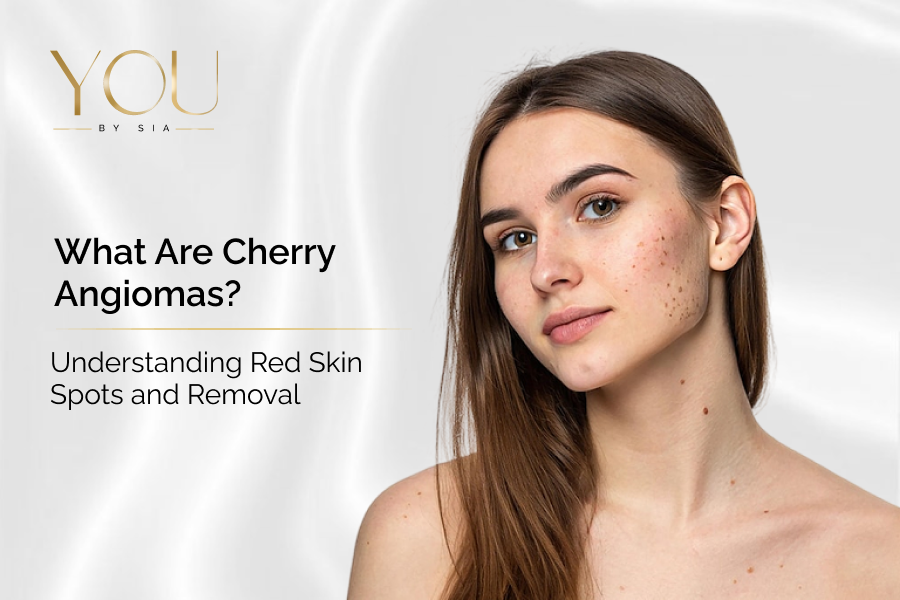
Those tiny red spots that suddenly seem to stand out on your skin can be easy to ignore. Until you notice another one.
Cherry angiomas are usually harmless and can appear as bright red, round, flat or slightly raised spots, particularly as you get older.
Despite their harmless nature, many people choose to have them removed because they are noticeable, catch on clothing or jewellery, or bleed after being irritated.
The important part is knowing what you are looking at first. Not every red spot on the skin is a cherry angioma, and a changing or unusual lesion should be assessed by a qualified professional rather than treated based on appearance alone.
If you have noticed new red spots and are considering removal before summer, read on to understand what cherry angiomas are, when they should be checked and what professional removal can involve.
What Are Cherry Angiomas?
Cherry angiomas are common, benign skin growths that develop when small blood vessels become clustered close to the skin’s surface. They can occur at any age but become more common as people get older.
Cherry angiomas can develop on different areas of the body, with the torso, abdomen, arms, shoulders and neck being common sites. Some people develop only one, while others may notice several over time.
Treatment is generally not medically necessary unless a lesion becomes irritated, bleeds repeatedly or causes cosmetic concern.
It is still important to have unusual or changing red spots assessed rather than assuming they are cherry angiomas. Changes in size, colour or appearance, persistent bleeding, or rapid growth can warrant professional assessment before any removal treatment is considered.
What Causes Cherry Angiomas?
The exact reason cherry angiomas develop is not fully understood. Research has identified some associations, but there is no single confirmed cause.
Age: Cherry angiomas become more common as people get older. This can explain why new spots may gradually appear over time.
Genetic tendency: Family history may influence how likely someone is to develop cherry angiomas. People with multiple lesions may have a greater inherited tendency to develop them.
Changes over time: It is common for the number of cherry angiomas to increase with age. Developing additional spots does not necessarily indicate an underlying health problem.
Other proposed factors: Various factors have been suggested as possible contributors, but evidence is not strong enough to describe them as established causes.
There is also no proven way to prevent every cherry angioma from developing. If new spots appear, particularly if one looks different from the others, professional assessment can help determine what it is.
How Can You Tell If a Red Spot Is a Cherry Angioma?
A cherry angioma often has a recognisable appearance, but looking at a spot yourself is not enough to confirm a diagnosis. Several different skin conditions can produce red or purple marks.
Some features commonly associated with cherry angiomas include:
Colour: They are often bright red, but can appear dark red, purple or slightly darker as they develop.
Shape: They are usually round or oval with fairly defined edges.
Size: Most are small, although some can grow larger over time.
Surface: A cherry angioma may be completely flat or slightly raised above the surrounding skin.
Location: They can occur on many areas of the body, particularly the abdomen, torso, arms, shoulders and neck.
Number: A person may develop a single angioma or several over time.
Other red marks can look similar. Spider angiomas, for example, typically have a central red spot with fine blood vessels spreading outwards, giving them a spider-like appearance. Other vascular lesions and skin conditions can also cause redness.
For this reason, appearance should be treated as a clue rather than a diagnosis. A qualified professional can assess a lesion more closely, particularly if it is new, changing, bleeding or noticeably different from other spots on your skin.
When Should a Red Spot Be Checked by a Professional?
Watch for Rapid Growth
A spot that becomes noticeably larger over a short period deserves professional attention. A sudden change in size can also make it harder to assume that the lesion is a typical cherry angioma.
Check for Colour Changes
Cherry angiomas can range from bright red to darker red or purple. A significant or unexpected change in colour, particularly alongside other changes, is worth having assessed.
Look for Persistent Bleeding
A cherry angioma can bleed after being scratched or repeatedly rubbed by clothing. Bleeding without an obvious cause, repeated bleeding or bleeding that does not settle should be assessed by a qualified professional.
Notice Irregular Changes
Changes to the shape, border or surface of a red spot can warrant closer examination. A lesion that looks noticeably different from your other spots should not automatically be assumed to be a cherry angioma.
Seek Advice When Unsure
Several skin conditions can appear as red or purple spots. If a lesion does not resemble a typical cherry angioma or you are uncertain about what you are seeing, professional assessment is the safer approach before considering removal.
Can Cherry Angiomas Be Removed?
Yes. Cherry angiomas can be removed, but treatment is usually a personal choice rather than a medical necessity. Since these growths are generally benign, removal is often considered when a person does not like their appearance or the spot causes ongoing irritation.
Consider Cosmetic Concerns
Some cherry angiomas are small and barely noticeable, while others can be more prominent. Removal may be considered if a visible spot affects how you feel about the appearance of your skin.
Address Repeated Irritation
Raised cherry angiomas can catch on clothing, jewellery or other surfaces. Repeated friction can make the area uncomfortable and may cause the spot to bleed.
Manage Recurrent Bleeding
A cherry angioma that is repeatedly scratched, knocked or rubbed may bleed. Removing a frequently irritated lesion can be considered after it has been appropriately assessed.
Assess the Lesion First
Before treatment, a qualified professional should confirm that the spot is suitable for removal. This is particularly important if it has changed in size, shape or colour, or does not have the usual characteristics of a cherry angioma.
The appropriate removal method will depend on factors such as the lesion’s size, location and appearance.
How Are Cherry Angiomas Removed?
Cherry angiomas can be removed through professional vascular treatments that target the blood vessels responsible for their red appearance. The right approach depends on the individual lesion and should be determined after an appropriate assessment.
Target the Blood Vessels With DYE-VL
DYE-VL delivers focused light energy to the blood vessels that make a cherry angioma appear red. The targeted energy helps treat these vessels, reducing the visible redness and appearance of the lesion over time.
The treatment is non-invasive and is intended to target the unwanted vascular tissue without treating the surrounding skin unnecessarily.
Plan Treatment Around Your Skin
The number of sessions required can vary depending on factors such as how many cherry angiomas are being treated and their individual characteristics.
You By Sia notes that one to three treatments may be needed for successful removal. Your practitioner can assess the areas being treated and recommend an appropriate treatment plan.
Give Your Skin Time to Recover
As with any vascular laser treatment, the treated area may experience temporary changes as the skin responds to the procedure. Following the aftercare advice provided by your practitioner is important during this period.
If you are considering treatment before summer, allow sufficient time between your appointment and increased sun exposure or planned events. Your practitioner can advise you on suitable timing based on your treatment and skin.
Consider Other Removal Techniques
Other methods can also be used to treat cherry angiomas, including fine wire diathermy, excision, ablative laser treatment and cryotherapy. These techniques work differently and may have different healing and scarring considerations.
For this reason, treatment should be selected following an assessment rather than based solely on the appearance of the spot.
What Happens After Cherry Angioma Removal?
Expect Temporary Skin Changes
Redness, tenderness, mild swelling or crusting can occur as the treated area settles. The appearance of the spot may also change temporarily before the skin reaches its longer-term result.
Follow Your Aftercare Instructions
Aftercare is not identical for every treatment. Laser-based treatment, cryotherapy, diathermy and other removal methods affect the skin differently, so your practitioner may provide specific instructions for keeping the area clean, avoiding irritation and supporting recovery.
Protect Treated Skin From the Sun
Sun protection is particularly relevant if you are having cherry angiomas removed before summer. Recently treated skin can be more sensitive, and unnecessary sun exposure may increase the chance of lingering pigmentation or irritation.
Use the sun protection recommended by your practitioner and follow their guidance on when normal skincare and sun exposure can be resumed.
Allow the Area Time to Settle
The treated area may take some time to settle fully. Avoid picking at crusting or irritating the skin while it recovers, even if the area looks different from the surrounding skin initially.
Your practitioner can explain what to expect based on the specific treatment used and advise you if the area is not healing as expected.
Conclusion
Cherry angiomas are usually harmless, but that does not mean every red spot on your skin should be assumed to be one. Changes in size, colour, shape or bleeding are reasons to have a lesion professionally assessed before considering removal.
For those who want to remove confirmed cherry angiomas, treatment options vary. At You By Sia, DYE-VL vascular treatment uses targeted light energy to address the blood vessels within the lesion, with the number of sessions determined according to the individual treatment plan.
If you are considering removal before summer, timing matters too. Give your skin enough time to settle and follow the aftercare advice provided by your practitioner, particularly around sun exposure.
A professional assessment is the right place to start if you are unsure about a red spot or are considering having it removed.
FAQs
1. Can You Have More Than One Cherry Angioma?
Yes. It is possible to develop several cherry angiomas over time. Having multiple spots is not unusual, particularly as the skin changes with age.
2. Do Cherry Angiomas Only Appear on the Upper Body?
No. Cherry angiomas can develop on different parts of the body. They are commonly noticed on areas such as the torso, arms, shoulders and neck, but their location can vary.
3. Are Cherry Angiomas the Same as Spider Angiomas?
No. Although both involve blood vessels and can appear red, they have different visual characteristics. Spider angiomas often have a central spot with fine vessels extending outward, while cherry angiomas generally appear as a distinct red spot or bump.
4. Can a Cherry Angioma Change in Appearance Over Time?
It can become larger, more raised or darker as it develops. A noticeable or sudden change should still be checked by a qualified professional, particularly if the spot looks different from your other lesions.
5. Who Can Assess a Red Spot Before Removal?
A qualified healthcare professional or appropriately trained practitioner can assess a suspicious or uncertain lesion before treatment. Confirming what the spot is should come before deciding whether cosmetic removal is appropriate.
